The user interface (UI) of World of Warcraft has always been a mirror of its design philosophy. What began as a minimalist, functional layout has evolved into a dynamic, customizable ecosystem reflecting the game’s increasing complexity. Every button, bar, and tooltip tells a story of adaptation—to new systems, modern player expectations, and two decades of innovation.
This article examines how the evolution of WoW’s interface mirrors the game’s journey from simplicity to sophistication, balancing accessibility with depth.
The Early Interface: Form Follows Function
In the 2004 launch version, WoW’s UI prioritized clarity. Health bars, ability slots, and quest trackers kept information minimal but accessible. Players managed with few addons, and much of the game’s charm lay in its simplicity. It was intuitive enough for newcomers yet flexible enough for veterans to experiment with macros and modding.
This foundation established Blizzard’s design principle: functionality first, aesthetics second—but that balance would shift over time.
The Rise of Addons and Player Customization
As gameplay systems grew, so did the need for more information. Community addons like Deadly Boss Mods, Recount, and WeakAuras filled gaps Blizzard hadn’t anticipated. Players effectively became co-designers, shaping how combat and strategy were visually represented.
Eventually, Blizzard embraced this culture, integrating popular addon features into official patches—showing that innovation in UI often came from collaboration between developers and players.
Interface Modernization Across Expansions
Each expansion brought a wave of UI enhancements tailored to its mechanics. Burning Crusade added raid frames for larger groups; Wrath of the Lich King refined spell tracking; Legion introduced artifact weapon panels; and Dragonflight delivered full interface customization.
Blizzard’s updates reflected more than technical improvements—they marked philosophical shifts toward empowerment, letting players tailor the game to personal style and comfort.
Design Philosophy: From Utility to Personality
As Warcraft matured, the UI evolved from being purely informative to expressive. Players could now arrange, resize, and stylize their interfaces to reflect playstyle. Tanks positioned resources centrally for awareness, healers used minimal overlays for clarity, and collectors highlighted achievements and currencies.
The UI became a reflection of identity—another layer of roleplay where form complemented function.
Challenges of Complexity
With progress came clutter. As systems like talents, professions, transmog, and warbands multiplied, so did icons, menus, and notifications. Blizzard faced the challenge of keeping usability intact amid growing information density. Redesigns aimed to streamline access without oversimplifying, preserving both power and clarity.
Recent overhauls, such as Dragonflight’s modular interface, represent Blizzard’s renewed focus on intuitive interaction without sacrificing depth.
| Expansion | UI Innovation | Impact |
|---|---|---|
| The Burning Crusade | Raid frames and PvP indicators | Enhanced group coordination |
| Wrath of the Lich King | Integrated threat meters | Improved tactical awareness |
| Legion | Artifact power and UI storytelling | Visual narrative depth |
| Dragonflight | Full UI customization | Player control and flexibility |
UI as Storytelling Tool
The interface also reflects narrative evolution. Legion’s artifact progression, Shadowlands’ covenant sanctums, and Dragonflight’s talent trees all turned menus into storytelling mediums. Even color palettes and iconography mirror expansion themes—fel green for Legion, cosmic blue for Shadowlands, and earthy gold for Dragonflight.
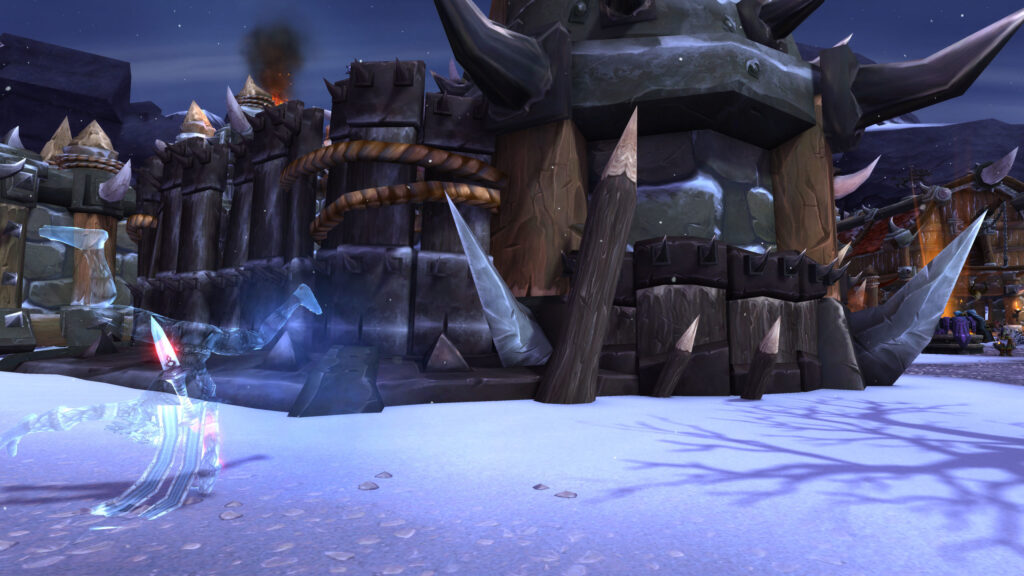
Through UI design, Blizzard communicates emotion and theme, proving that the interface isn’t just a utility—it’s part of the world’s language.
Conclusion
WoW’s UI tells the story of the game itself: an ever-growing, player-driven experience adapting to new systems and expectations. From static bars to dynamic customization, every iteration represents dialogue between developer and community. The interface has evolved from mere control panel to cultural artifact—an inseparable part of what makes Warcraft feel alive.
As the game continues to grow, its UI will remain its mirror—reflecting not only how we play, but who we’ve become.